AHSEC Class 12 Education Question Paper 2024,
Full Marks (সম্পূৰ্ণ নম্বৰ): 100
Pass Marks (উত্তীৰ্ণ নম্বৰ): 30
Time (সময়): 3 hours (ঘণ্টা)
AHSEC Class 12 Education Question Paper 2024 Solution
১। তলত দিয়া প্ৰশ্নসমূহৰ উত্তৰ দিয়া : (যিকোনো বাৰটা)
1. Answer the following questions: (any twelve) (1 × 12 = 12)
খালী ঠাই পূৰ কৰা : (Fill in the blanks:)
(a) ১৯৫২-৫৩ চনৰ মাধ্যমিক শিক্ষা আয়োগৰ অধ্যক্ষ আছিল ।
(a) The Chairman of Secondary Education Commission of 1952-53 was .
উত্তৰ / Answer: ড° এ লক্ষ্মণস্বামী মুডালিয়াৰ (Dr. A. Lakshmanaswami Mudaliar)
(b) _ চনৰ পৰা ১৯৪৮ চনলৈকে অসমৰ মাধ্যমিক শিক্ষাৰ প্ৰশাসনৰ দায়িত্ব কলিকতা বিশ্ববিদ্যালয়ে গ্ৰহণ কৰিছিল।
(b) Secondary education system of Assam was controlled by Calcutta University since _ to 1948.
উত্তৰ / Answer: ১৯১৭ (1917)
(c) ত ভাৰতবৰ্ষৰ প্ৰথমখন মুক্ত বিশ্ববিদ্যালয় স্থাপন কৰা হৈছিল।
(c) In the state of , the first Open University of India was established.
উত্তৰ / Answer: অন্ধ্ৰ প্ৰদেশ (Andhra Pradesh)
(d) শিক্ষক আৰু শিক্ষাৰ্থীৰ মাজৰ প্ৰত্যক্ষ সম্পৰ্কৰ অনুপস্থিতি _ শিক্ষাৰ এটা গুৰুত্বপূৰ্ণ বৈশিষ্ট্য।
(d) Absence of direct contact between teacher and student is an important characteristic of _ Education.
উত্তৰ / Answer: অগতানুগতিক (Non-formal)
(e) ১৮৬৯ চনতেই _ নামৰ এজন জাৰ্মান জীৱবিজ্ঞানীয়ে ‘পৰিৱেশ সচেতনতা’ৰ কথা উল্লেখ কৰিছিল।
(e) A German biologist _ introduced the concept of ‘Environmental Consciousness’ in 1869.
উত্তৰ / Answer: আৰ্নষ্ট হেকেল (Ernst Haeckel)
(f) ‘জনসংখ্যা শিক্ষা’ৰ ধাৰণাটো আমেৰিকাৰ সমাজতত্ত্ববিদ য়ে দাঙি ধৰিছিল।
(f) The concept of ‘Population Education’ was developed by the American sociologist .
উত্তৰ / Answer: শ্ল’ৱান আৰ. ৱেইলেণ্ড (Sloan R. Wayland)
(g) ‘গেষ্টাল্ট’ এটা জাৰ্মান শব্দ যাৰ অৰ্থ হৈছে ‘’ বা ‘সম্পূৰ্ণ আকাৰ’।
(g) ‘Gestalt’ is a German word which means ‘’ or ‘total pattern’.
উত্তৰ / Answer: সমগ্ৰ ৰূপ (Whole form)
(h) বহুভুজ অংকন কৰোঁতে বাৰংবাৰতাৰ মানসমূহ শ্ৰেণী অন্তৰালৰ ৰ ওপৰত সংস্থাপন কৰা হয়।
(h) In a polygon, frequencies are plotted on of the class intervals.
উত্তৰ / Answer: মধ্যবিন্দু (mid-points)
এটা বাক্যত উত্তৰ দিয়া :
Give short answer in one sentence:
(i) কোন চনত অসমৰ কৃষ্ণ কান্ত সন্দিকৈ ৰাজ্যিক মুক্ত বিশ্ববিদ্যালয় স্থাপন কৰা হৈছিল?
(i) In which year Krishna Kanta Handique State Open University was established in Assam?
উত্তৰ / Answer: ২০০৬ চনত অসমৰ কৃষ্ণ কান্ত সন্দিকৈ ৰাজ্যিক মুক্ত বিশ্ববিদ্যালয় স্থাপন কৰা হৈছিল। (Krishna Kanta Handique State Open University was established in Assam in 2006.)
(j) কোন চনৰ পৰা অসমৰ ১২-বছৰীয়া স্কুলীয়া শিক্ষা ব্যৱস্থা প্ৰৱৰ্তন কৰা হৈছে?
(j) From which year twelve-year school education course has been implemented in Assam?
উত্তৰ / Answer: ১৯৮৬ চনৰ ৰাষ্ট্ৰীয় শিক্ষানীতিৰ আধাৰত অসমত ১২-বছৰীয়া স্কুলীয়া শিক্ষা ব্যৱস্থা প্ৰৱৰ্তন কৰা হৈছে। (The 12-year school education system was implemented in Assam based on the National Policy on Education, 1986.)
(k) কোন চনত ভাৰতবৰ্ষত মহিলাৰ সৱলীকৰণ ৰাষ্ট্ৰীয় নীতি গ্ৰহণ কৰা হৈছিল?
(k) In which year National Policy for the Empowerment of Women was adopted in India?
উত্তৰ / Answer: ২০০১ চনত ভাৰতবৰ্ষত মহিলাৰ সৱলীকৰণ ৰাষ্ট্ৰীয় নীতি গ্ৰহণ কৰা হৈছিল। (The National Policy for the Empowerment of Women was adopted in India in 2001.)
(l) “শিক্ষণ হৈছে অভিজ্ঞতা আৰু প্ৰশিক্ষণৰ যোগেদি কৰা আচৰণৰ সংশোধন কাৰ্য।” এই উক্তিষাৰ কোনে কৈছিল?
(l) “Learning is the modification of behaviour through experience and training.” Who said this statement?
উত্তৰ / Answer: এই উক্তিটো গেট্ছ (Gates) আৰু অন্যান্যসকলে কৈছিল। (This statement was made by Gates and others.)
(m) শিক্ষণৰ সংযোগবাদ তত্ত্বৰ স্ৰষ্টা কোন আছিল?
(m) Who propounded the theory of connectionism?
উত্তৰ / Answer: শিক্ষণৰ সংযোগবাদ তত্ত্বৰ স্ৰষ্টা আছিল এডৱাৰ্ড লী থৰ্নডাইক (Edward Lee Thorndike)। (The propounder of the theory of connectionism was Edward Lee Thorndike.)
(n) শিক্ষণৰ ফলাফলৰ বা পৰিণামৰ নীতি কাক বোলে?
(n) What is law of effect?
উত্তৰ / Answer: থৰ্নডাইকৰ মতে, যি আচৰণে সন্তোষজনক ফলাফল দিয়ে, সেই আচৰণটো ভৱিষ্যতে পুনৰ হোৱাৰ সম্ভাৱনা বাঢ়ে, আৰু যি আচৰণে অসন্তোষজনক ফলাফল দিয়ে, তাৰ সম্ভাৱনা কমে; ইয়াকে ফলাফলৰ নীতি বোলে। (According to Thorndike, behaviors that lead to satisfying consequences are likely to be repeated, and behaviors that lead to unsatisfying consequences are less likely to be repeated; this is called the law of effect.)
(o) “আগ্ৰহ মনোযোগৰ সুপ্ত অৱস্থা আৰু মনোযোগ আগ্ৰহৰ সক্ৰিয় অৱস্থা মাথোন।” এই উক্তিটো কাৰ?
(o) “Interest is latent attention, and attention is interest in action.” Who said this statement?
উত্তৰ / Answer: এই উক্তিটো মেকডুগালৰ (McDougall)। (This statement is by McDougall.)
(p) ‘অনুমিত গড়’ পদ্ধতিৰে গড় নিৰ্ণয় কৰা সূত্ৰটো লিখা।
(p) Write the formula for finding out mean by ‘assumed mean’ method.
উত্তৰ / Answer: গড় (Mean), M = A + (Σfd / N) × i
য’ত (where), A = অনুমিত গড় (Assumed Mean), f = বাৰংবাৰতা (frequency), d = বিচ্যুতি (deviation), N = মুঠ বাৰংবাৰতা (Total frequency), i = শ্ৰেণী অন্তৰাল (class interval)।
২। তলত দিয়া যিকোনো বাৰটা প্ৰশ্নৰ উত্তৰ দিয়া :
2. Answer any twelve of the following questions: (2 × 12 = 24)
(a) অসমৰ মাধ্যমিক শিক্ষাত কোঠাৰী আয়োগৰ পৰামৰ্শৰ দুটা উল্লেখযোগ্য প্ৰভাৱ উল্লেখ কৰা।
(a) Mention two important impacts of Kothari Commission on the Secondary Education of Assam.
উত্তৰ / Answer:
১০+২+৩ শিক্ষাৰ গাঁথনি (10+2+3 Structure of Education): কোঠাৰী আয়োগৰ পৰামৰ্শমতেই অসমকে ধৰি সমগ্ৰ ভাৰতত ১০+২+৩ শিক্ষাৰ গাঁথনি প্ৰৱৰ্তন কৰা হয়, যিয়ে শিক্ষা ব্যৱস্থাক এক ৰাষ্ট্ৰীয় ৰূপ দিয়ে।
কৰ্ম অভিজ্ঞতা (Work Experience): এই আয়োগে শিক্ষাক জীৱনৰ লগত জড়িত কৰিবলৈ কৰ্ম অভিজ্ঞতাক পাঠ্যক্ৰমৰ এক অপৰিহাৰ্য অংগ হিচাপে অন্তৰ্ভুক্ত কৰাৰ ওপৰত গুৰুত্ব দিছিল।
(b) অগতানুগতিক শিক্ষাৰ দুটা গুৰুত্ব বা প্ৰয়োজনীয়তা উল্লেখ কৰা।
(b) Write two importances of Non-formal Education.
উত্তৰ / Answer:
নমনীয়তা (Flexibility): অগতানুগতিক শিক্ষাৰ সময়, স্থান আৰু পাঠ্যক্ৰম নমনীয় হোৱাৰ বাবে ই বিভিন্ন বয়সৰ আৰু পৰিস্থিতিৰ লোকৰ বাবে সুবিধাজনক।
সৰ্বাংগীন শিক্ষা (Holistic Education): ই কেৱল শৈক্ষিক জ্ঞানতেই সীমাবদ্ধ নাথাকি জীৱনৰ বাবে প্ৰয়োজনীয় বিভিন্ন দক্ষতা আৰু বৃত্তিমূলক শিক্ষা প্ৰদান কৰে।
(c) আনুষ্ঠানিক শিক্ষা আৰু অগতানুগতিক শিক্ষাৰ মাজত থকা দুটা পাৰ্থক্য উল্লেখ কৰা।
(c) Write two differences between Formal Education and Non-formal Education.
উত্তৰ / Answer:
গাঁথনি (Structure): আনুষ্ঠানিক শিক্ষা এক সুপৰিকল্পিত, কঠোৰ আৰু স্তৰভিত্তিক গাঁথনিৰ মাজত (যেনে- স্কুল, কলেজ) দিয়া হয়, আনহাতে অগতানুগতিক শিক্ষাৰ গাঁথনি নমনীয় আৰু শিথিল।
পাঠ্যক্ৰম (Curriculum): আনুষ্ঠানিক শিক্ষাৰ পাঠ্যক্ৰম নিৰ্দিষ্ট আৰু বাধ্যতামূলক, কিন্তু অগতানুগতিক শিক্ষাৰ পাঠ্যক্ৰম শিক্ষাৰ্থীৰ প্ৰয়োজন অনুসৰি পৰিৱৰ্তনশীল।
(d) জনসংখ্যা শিক্ষাৰ দুটা প্ৰয়োজনীয়তা উল্লেখ কৰা।
(d) Mention two needs of population education.
উত্তৰ / Answer:
জনসংখ্যা বৃদ্ধিৰ প্ৰতি সচেতনতা (Awareness about Population Growth): জনসংখ্যাৰ দ্ৰুত বৃদ্ধিৰ ফলত সৃষ্টি হোৱা সমস্যাসমূহৰ বিষয়ে জনসাধাৰণক, বিশেষকৈ ছাত্ৰ-ছাত্ৰীসকলক সচেতন কৰা।
জীৱনৰ মানদণ্ড উন্নত কৰা (Improving Quality of Life): সৰু পৰিয়ালৰ গুৰুত্ব আৰু পৰিয়াল পৰিকল্পনাৰ বিষয়ে জ্ঞান দি মানুহৰ জীৱনৰ মানদণ্ড উন্নত কৰাত সহায় কৰা।
(e) শাৰীৰিক শিক্ষাৰ দুটা প্ৰয়োজনীয়তা আৰু গুৰুত্ব উল্লেখ কৰা।
(e) Write two needs and importance of physical education.
উত্তৰ / Answer:
শাৰীৰিক বিকাশ (Physical Development): ই ছাত্ৰ-ছাত্ৰীৰ শাৰীৰিক অংগ-প্ৰত্যংগৰ সুষম বিকাশত সহায় কৰে আৰু তেওঁলোকক শাৰীৰিকভাৱে সুস্থ আৰু সৱল কৰি তোলে।
মানসিক বিকাশ (Mental Development): শাৰীৰিক শিক্ষা আৰু খেলে মানসিক সতৰ্কতা, মনোযোগ আৰু নিয়মানুৱৰ্তিতা বৃদ্ধি কৰে।
(f) পৰিপক্কতা আৰু শিক্ষণৰ মাজত থকা দুটা সম্বন্ধ উল্লেখ কৰা।
(f) Write two relations between maturation and learning.
উত্তৰ / Answer:
পৰিপক্কতা শিক্ষণৰ পূৰ্বচৰ্ত (Maturation is a prerequisite for learning): কোনো এটা বিষয় শিকিবলৈ হ’লে ব্যক্তিজন শাৰীৰিক আৰু মানসিকভাৱে পৰিপক্ক হ’ব লাগিব। যেনে, এটা শিশুৱে খোজ কাঢ়িবলৈ শিকাৰ আগতে তাৰ ভৰিৰ মাংসপেশীবোৰ পৰিপক্ক হ’ব লাগিব।
শিক্ষণে পৰিপক্কতাক সহায় কৰে (Learning aids maturation): উপযুক্ত প্ৰশিক্ষণ আৰু অভিজ্ঞতাই ব্যক্তিৰ পৰিপক্কতাৰ প্ৰক্ৰিয়াটোক ত্বৰান্বিত কৰিব পাৰে।
(g) শিক্ষণৰ দুটা অভ্যন্তৰীণ বা ব্যক্তিনিষ্ঠ চৰ্ত উল্লেখ কৰা।
(g) Write two subjective factors of learning.
উত্তৰ / Answer:
আগ্ৰহ আৰু মনোযোগ (Interest and Attention): শিক্ষাৰ্থীৰ কোনো বিষয়ৰ প্ৰতি থকা আগ্ৰহ আৰু মনোযোগে শিক্ষণ প্ৰক্ৰিয়াক সহজ আৰু ফলপ্ৰসূ কৰি তোলে।
বুদ্ধি (Intelligence): ব্যক্তিৰ বুদ্ধিমত্তাৰ স্তৰে তেওঁৰ শিকাৰ গতি আৰু ক্ষমতাক প্ৰভাৱিত কৰে।
(h) অভ্যাস স্মৃতি কাক বোলে?
(h) What is habit memory?
উত্তৰ / Answer: কোনো কাম বাৰে বাৰে অভ্যাস কৰাৰ ফলত যেতিয়া সেই কামটো যান্ত্ৰিকভাৱে আৰু প্ৰায় অচেতনভাৱে মনত থাকে, তেনে স্মৃতিক অভ্যাস স্মৃতি বোলে। যেনে, চাইকেল চলোৱা বা টাইপ কৰা।
(i) বিস্মৃতিৰ দুটা মানসিক কাৰণ উল্লেখ কৰা।
(i) Write two mental causes of forgetting.
উত্তৰ / Answer:
অৱদমন (Repression): বেদনাদায়ক বা লজ্জাজনক অভিজ্ঞতাবোৰক অচেতনভাৱে মনৰ পৰা আঁতৰাই পঠোৱাৰ ফলত বিস্মৃতি ঘটে।
অনুশীলনৰ অভাৱ (Lack of Practice): শিকা বিষয় এটা বহুদিন ধৰি অনুশীলন বা ব্যৱহাৰ নকৰিলে পাহৰি যোৱা যায়।
(j) ঐচ্ছিক বা ইচ্ছাকৃত মনোযোগ কাক বোলে?
(j) What is voluntary or volitional attention?
উত্তৰ / Answer: যেতিয়া কোনো ব্যক্তিৰ ইচ্ছা, প্ৰচেষ্টা বা সংকল্পৰ জৰিয়তে কোনো বস্তু বা বিষয়ৰ প্ৰতি মনোযোগ দিয়া হয়, তেতিয়া তাক ঐচ্ছিক বা ইচ্ছাকৃত মনোযোগ বোলে।
(k) আগ্ৰহৰ দুটা বৈশিষ্ট্য উল্লেখ কৰা।
(k) Write two characteristics of interest.
উত্তৰ / Answer:
আগ্ৰহ জন্মগত আৰু অৰ্জিত (Interest is both innate and acquired): কিছুমান আগ্ৰহ জন্মগত হয়, আনহাতে বেছিভাগ আগ্ৰহেই অভিজ্ঞতা আৰু শিক্ষাৰ জৰিয়তে অৰ্জন কৰা হয়।
আগ্ৰহ পৰিৱৰ্তনশীল (Interest is dynamic): ব্যক্তিৰ বয়স, অভিজ্ঞতা আৰু পৰিৱেশৰ লগে লগে আগ্ৰহৰো পৰিৱৰ্তন ঘটে।
(l) মানসিক স্বাস্থ্যৰ যিকোনো দুটা উদ্দেশ্য উল্লেখ কৰা।
(l) Write any two objectives of mental health.
উত্তৰ / Answer:
সামঞ্জস্য বিধান (Adjustment): ব্যক্তিক নিজৰ আৰু পৰিৱেশৰ লগত সফলতাৰে সামঞ্জস্য বিধান কৰি চলিবলৈ সক্ষম কৰি তোলা।
আত্ম-উপলব্ধি (Self-realization): ব্যক্তিৰ অন্তৰ্নিহিত সম্ভাৱনাসমূহৰ পূৰ্ণ বিকাশত সহায় কৰি আত্ম-উপলব্ধিৰ পথ প্ৰশস্ত কৰা।
(m) মানসিক স্বাস্থ্যবিজ্ঞানৰ যিকোনো দুটা লক্ষ্য উল্লেখ কৰা।
(m) Write any two aims of mental hygiene.
উত্তৰ / Answer:
মানসিক ৰোগ প্ৰতিৰোধ (Prevention of Mental Illness): মানসিক ৰোগৰ কাৰণসমূহ চিনাক্ত কৰি সেইবোৰ প্ৰতিৰোধ কৰাৰ ব্যৱস্থা কৰা।
মানসিক স্বাস্থ্যৰ সংৰক্ষণ (Preservation of Mental Health): ব্যক্তিৰ মানসিক স্বাস্থ্য অটুট ৰাখিবলৈ প্ৰয়োজনীয় পৰিৱেশ আৰু পৰামৰ্শ আগবঢ়োৱা।
(n) কেন্দ্ৰীয় প্ৰৱণতাৰ জোখ বুলিলে কি বুজা?
(n) What do you mean by measures of central tendency?
উত্তৰ / Answer: কেন্দ্ৰীয় প্ৰৱণতাৰ জোখ হৈছে এনে এক সাংখ্যিক মান যি এটা তথ্যৰাশিৰ কেন্দ্ৰীয় বা প্ৰতিনিধিত্বমূলক মানক সূচায়। গড়, মধ্যমা আৰু বহুলক হৈছে ইয়াৰ প্ৰধান জোখ।
(o) তলত দিয়া তথ্যৰাশিৰ পৰা গড় আৰু বহুলক নিৰ্ণয় কৰা : 30, 48, 56, 64, 78, 82, 60, 50, 56 and 46
(o) Calculate mean and mode from the following data: 30, 48, 56, 64, 78, 82, 60, 50, 56 and 46
উত্তৰ / Answer:
গড় (Mean):
গড় = (তথ্যসমূহৰ যোগফল) / (মুঠ তথ্যৰ সংখ্যা)
Mean = (Sum of observations) / (Total number of observations)
যোগফল (Sum) = 30+48+56+64+78+82+60+50+56+46 = 570
মুঠ তথ্যৰ সংখ্যা (Total observations) = 10
গড় (Mean) = 570/10 = 57
বহুলক (Mode):
বহুলক হৈছে তথ্যৰাশিত আটাইতকৈ বেছিবাৰ থকা মানটো।
Mode is the value that appears most frequently in a data set.
ইয়াত, 56 সংখ্যাটো দুবাৰ আছে, যি আনবোৰতকৈ বেছি।
Here, the number 56 appears twice, which is more than any other number.
বহুলক (Mode) = 56
৩। তলত দিয়া যিকোনো দহটা প্ৰশ্নৰ উত্তৰ দিয়া :
3. Answer any ten of the following questions: (4 × 10 = 40)
(a) মাধ্যমিক শিক্ষাৰ লক্ষ্য সম্পৰ্কে মুডালিয়াৰ আয়োগে আগবঢ়োৱা চাৰিটা পৰামৰ্শ আলোচনা কৰা।
(a) Discuss four aims of Secondary Education recommended by Mudaliar Commission.
উত্তৰ: মুডালিয়াৰ আয়োগে (১৯৫২-৫৩) মাধ্যমিক শিক্ষাৰ বাবে চাৰিটা মুখ্য লক্ষ্য নিৰ্ধাৰণ কৰিছিল:
ব্যক্তিত্বৰ সৰ্বাংগীন বিকাশ: ছাত্ৰ-ছাত্ৰীৰ শাৰীৰিক, মানসিক, আৱেগিক আৰু নৈতিক বিকাশ সাধন কৰি তেওঁলোকক সুস্থ আৰু সুনাগৰিক হিচাপে গঢ়ি তোলা।
গণতান্ত্ৰিক নাগৰিকত্বৰ বিকাশ: ছাত্ৰ-ছাত্ৰীৰ মাজত গণতান্ত্ৰিক মূল্যবোধ, যেনে- সহনশীলতা, ভাতৃত্ববোধ, সামাজিক ন্যায় আৰু দায়িত্ববোধৰ বিকাশ ঘটোৱা।
বৃত্তিমূলক দক্ষতাৰ উন্নতি: ছাত্ৰ-ছাত্ৰীসকলক বিভিন্ন বৃত্তিমূলক শিক্ষা প্ৰদান কৰি তেওঁলোকক আত্মনিৰ্ভৰশীল কৰি তোলা আৰু দেশৰ অৰ্থনৈতিক বিকাশত সহায় কৰা।
নেতৃত্বৰ বিকাশ: ছাত্ৰ-ছাত্ৰীৰ মাজত নেতৃত্বৰ গুণাৱলী, যেনে- আত্মবিশ্বাস, সিদ্ধান্ত লোৱাৰ ক্ষমতা আৰু দলবদ্ধভাৱে কাম কৰাৰ প্ৰৱণতাৰ বিকাশ ঘটোৱা।
Answer: The Mudaliar Commission (1952-53) had set four main aims for secondary education:
Development of complete personality: To develop the physical, mental, emotional, and moral aspects of students to shape them into healthy and good citizens.
Development of democratic citizenship: To cultivate democratic values like tolerance, fraternity, social justice, and a sense of responsibility among students.
Improvement of vocational efficiency: To make students self-reliant and contribute to the country’s economic development by providing them with various vocational skills.
Development of leadership: To develop leadership qualities among students, such as self-confidence, decision-making ability, and the tendency to work in a team.
(b) মুক্ত শিক্ষাৰ চাৰিটা উদ্দেশ্য উল্লেখ কৰা।
(b) Write four objectives of Open Education.
উত্তৰ: মুক্ত শিক্ষাৰ চাৰিটা উদ্দেশ্য হ’ল:
শিক্ষা সকলোলৈকে সুলভ কৰা: যিসকল লোকে বিভিন্ন কাৰণত আনুষ্ঠানিক শিক্ষা গ্ৰহণ কৰিব পৰা নাই, তেওঁলোকক শিক্ষাৰ সুবিধা প্ৰদান কৰা।
জীৱনজোৰা শিক্ষাৰ সুবিধা: ব্যক্তিৰ বয়স বা পূৰ্বৰ শিক্ষাগত অৰ্হতা নিৰ্বিশেষে তেওঁলোকক নিজৰ জ্ঞান আৰু দক্ষতা বৃদ্ধি কৰাৰ সুযোগ দিয়া।
বৃত্তিমূলক দক্ষতাৰ বিকাশ: বিভিন্ন বৃত্তিমূলক পাঠ্যক্ৰমৰ জৰিয়তে ব্যক্তিক আত্মনিৰ্ভৰশীল কৰি তোলা আৰু তেওঁলোকৰ কৰ্মসংস্থাপনৰ সুযোগ বৃদ্ধি কৰা।
সামাজিক সমতা স্থাপন: শিক্ষাৰ ক্ষেত্ৰত থকা বৈষম্য দূৰ কৰি সমাজৰ সকলো শ্ৰেণীৰ লোকক শিক্ষাৰ সমান সুযোগ প্ৰদান কৰা।
Answer: The four objectives of Open Education are:
Making education accessible to all: To provide educational opportunities to those who could not receive formal education for various reasons.
Providing lifelong learning opportunities: To give individuals the opportunity to enhance their knowledge and skills, regardless of their age or previous educational qualifications.
Developing vocational skills: To make individuals self-reliant and increase their employment opportunities through various vocational courses.
Establishing social equality: To remove disparities in education and provide equal educational opportunities to people from all sections of society.
(c) মুক্ত বিশ্ববিদ্যালয়ৰ চাৰিটা বৈশিষ্ট্য উল্লেখ কৰা।
(c) Write four characteristics of Open University.
উত্তৰ: মুক্ত বিশ্ববিদ্যালয়ৰ চাৰিটা বৈশিষ্ট্য হ’ল:
নমনীয়তা: ইয়াত নামভৰ্তি, পাঠ্যক্ৰম নিৰ্বাচন, পৰীক্ষা দিয়াৰ সময় আদিৰ ক্ষেত্ৰত নমনীয়তা থাকে।
দূৰ শিক্ষা পদ্ধতি: শিক্ষাৰ্থীসকলে ঘৰতে থাকি বা নিজৰ সুবিধা অনুসৰি অধ্যয়ন কৰিব পাৰে, য’ত শিক্ষক আৰু শিক্ষাৰ্থীৰ মাজত প্ৰত্যক্ষ সম্পৰ্কৰ প্ৰয়োজন নহয়।
বয়সৰ কোনো সীমা নাই: ইয়াত নামভৰ্তিৰ বাবে বয়সৰ কোনো উৰ্ধসীমা নাথাকে, যাৰ ফলত যিকোনো বয়সৰ লোকে শিক্ষা গ্ৰহণ কৰিব পাৰে।
কম খৰচ: আনুষ্ঠানিক শিক্ষাৰ তুলনাত মুক্ত বিশ্ববিদ্যালয়ত শিক্ষা গ্ৰহণৰ খৰচ কম হয়।
Answer: The four characteristics of an Open University are:
Flexibility: It offers flexibility in terms of admission, choice of curriculum, examination schedule, etc.
Distance Learning Method: Students can study from home or at their convenience, where direct contact between teacher and student is not required.
No age limit: There is no upper age limit for admission, allowing people of any age to pursue education.
Low Cost: The cost of education in an open university is lower compared to formal education.
(d) পৰিৱেশ শিক্ষাৰ চাৰিটা নীতি আলোচনা কৰা।
(d) Discuss four principles of Environmental Education.
উত্তৰ: পৰিৱেশ শিক্ষাৰ চাৰিটা নীতি হ’ল:
সচেতনতা: পৰিৱেশৰ সমস্যাসমূহ আৰু ইয়াৰ প্ৰতি সংবেদনশীলতাৰ বিষয়ে ব্যক্তি আৰু গোটসমূহৰ মাজত সচেতনতা বৃদ্ধি কৰা।
জ্ঞান: পৰিৱেশ আৰু ইয়াৰ সমস্যাসমূহৰ বিষয়ে জ্ঞান আৰু বুজাবুজি বৃদ্ধি কৰা।
দক্ষতা: পৰিৱেশৰ সমস্যাসমূহ চিনাক্ত আৰু সমাধান কৰিবলৈ প্ৰয়োজনীয় দক্ষতাৰ বিকাশ ঘটোৱা।
অংশগ্ৰহণ: পৰিৱেশৰ সমস্যাসমূহ সমাধানৰ বাবে সকলো স্তৰৰ লোকক অংশগ্ৰহণ কৰিবলৈ উৎসাহিত কৰা।
Answer: The four principles of Environmental Education are:
Awareness: To increase awareness among individuals and groups about environmental issues and their sensitivity towards them.
Knowledge: To increase knowledge and understanding of the environment and its problems.
Skills: To develop the necessary skills to identify and solve environmental problems.
Participation: To encourage people at all levels to participate in solving environmental problems.
(e) প্ৰচেষ্টা আৰু ভুল শিক্ষণ পদ্ধতিৰ চাৰিটা বৈশিষ্ট্য আলোচনা কৰা।
(e) Discuss four characteristics of the Trial and Error method of learning.
উত্তৰ: প্ৰচেষ্টা আৰু ভুল শিক্ষণ পদ্ধতিৰ চাৰিটা বৈশিষ্ট্য হ’ল:
লক্ষ্য নিৰ্ধাৰণ: এই পদ্ধতিত শিক্ষাৰ্থীৰ এটা নিৰ্দিষ্ট লক্ষ্য থাকে যিটো তেওঁলোকে উপনীত হ’ব বিচাৰে।
বিভিন্ন প্ৰতিক্ৰিয়া: লক্ষ্যত উপনীত হ’বলৈ শিক্ষাৰ্থীয়ে বিভিন্ন ধৰণৰ প্ৰতিক্ৰিয়া বা চেষ্টা কৰে।
ভুলৰ সংখ্যা হ্ৰাস: প্ৰচেষ্টাৰ পুনৰাবৃত্তিৰ লগে লগে ভুলৰ সংখ্যা ক্ৰমান্বয়ে হ্ৰাস পায়।
সঠিক প্ৰতিক্ৰিয়াৰ নিৰ্বাচন: বহু চেষ্টাৰ পিছত শিক্ষাৰ্থীয়ে সঠিক প্ৰতিক্ৰিয়াটো বাছি লয় যিটোৱে তেওঁক লক্ষ্যত উপনীত হোৱাত সহায় কৰে।
Answer: The four characteristics of the Trial and Error method of learning are:
Goal Setting: In this method, the learner has a specific goal they want to achieve.
Varied Responses: The learner makes various responses or attempts to reach the goal.
Reduction of Errors: With repeated attempts, the number of errors gradually decreases.
Selection of Correct Response: After many attempts, the learner selects the correct response that helps them achieve the goal.
(f) অনুবন্ধনৰ দ্বাৰা শিক্ষণৰ চাৰিটা শৈক্ষিক বা শিক্ষাগত তাৎপৰ্য আলোচনা কৰা।
(f) Discuss four educational significances of learning by conditioning.
উত্তৰ: অনুবন্ধনৰ দ্বাৰা শিক্ষণৰ চাৰিটা শৈক্ষিক তাৎপৰ্য হ’ল:
আচৰণ সংশোধন: এই পদ্ধতিৰ দ্বাৰা ছাত্ৰ-ছাত্ৰীৰ অবাঞ্চিত আচৰণ সংশোধন কৰি বাঞ্ছিত আচৰণৰ বিকাশ ঘটাব পাৰি।
ভাল অভ্যাস গঠন: ছাত্ৰ-ছাত্ৰীৰ মাজত ভাল অভ্যাস, যেনে- সময়ানুবৰ্তিতা, পৰিষ্কাৰ-পৰিচ্ছন্নতা আদি গঢ়ি তোলাত সহায় কৰে।
ভয় আৰু উদ্বেগ দূৰ কৰা: অনুবন্ধনৰ জৰিয়তে ছাত্ৰ-ছাত্ৰীৰ মনৰ পৰা পৰীক্ষাৰ ভয়, শিক্ষকৰ ভয় আদি অবাঞ্ছিত ভয় দূৰ কৰিব পাৰি।
শিক্ষণৰ প্ৰেৰণা: উপযুক্ত অনুবন্ধনৰ জৰিয়তে ছাত্ৰ-ছাত্ৰীৰ মাজত শিকাৰ প্ৰতি আগ্ৰহ আৰু প্ৰেৰণা বৃদ্ধি কৰিব পাৰি।
Answer: The four educational significances of learning by conditioning are:
Modification of Behavior: This method can be used to modify undesirable behaviors and develop desirable behaviors in students.
Formation of Good Habits: It helps in inculcating good habits like punctuality, cleanliness, etc., among students.
Elimination of Fear and Anxiety: Through conditioning, undesirable fears like exam phobia, fear of teachers, etc., can be eliminated from the minds of students.
Motivation for Learning: Through appropriate conditioning, interest and motivation for learning can be increased among students.
(g) ভাল স্মৃতিৰ লক্ষণসমূহ আলোচনা কৰা।
(g) Discuss the marks of good memory.
উত্তৰ: ভাল স্মৃতিৰ লক্ষণসমূহ হ’ল:
দ্ৰুত শিক্ষণ: ভাল স্মৃতি থকা ব্যক্তিয়ে কোনো বিষয় সোনকালে আৰু সহজে শিকিব পাৰে।
দীৰ্ঘস্থায়ী ধাৰণ: শিকা বিষয়বস্তু দীৰ্ঘদিন ধৰি মনত ৰাখিব পাৰে।
দ্ৰুত পুনৰুদ্ধাৰ: প্ৰয়োজন অনুসৰি শিকা বিষয়বস্তু সোনকালে মনত পেলাব পাৰে।
সঠিক পুনৰুদ্ধাৰ: শিকা বিষয়বস্তু সঠিকভাৱে চিনাক্ত কৰিব পাৰে আৰু ভুল নকৰে।
Answer: The marks of good memory are:
Quick Learning: A person with a good memory can learn any subject quickly and easily.
Long Retention: They can retain the learned material for a long time.
Quick Recall: They can recall the learned material quickly when needed.
Accurate Recognition: They can recognize the learned material accurately without making mistakes.
(h) বিস্মৃতিৰ যিকোনো চাৰিটা বৈশিষ্ট্য আলোচনা কৰা।
(h) Discuss any four characteristics of forgetting.
উত্তৰ: বিস্মৃতিৰ চাৰিটা বৈশিষ্ট্য হ’ল:
ক্ৰমান্বয়ে হ্ৰাস: বিস্মৃতি সাধাৰণতে ক্ৰমান্বয়ে ঘটে, অৰ্থাৎ সময়ৰ লগে লগে শিকা বিষয়বস্তু পাহৰি যোৱাৰ প্ৰৱণতা বাঢ়ে।
ব্যক্তিগত পাৰ্থক্য: বিস্মৃতিৰ হাৰ ব্যক্তিভেদে ভিন্ন হয়; কিছুমান লোকে সোনকালে পাহৰে, আন কিছুমানে পলমকৈ।
পুনৰুদ্ধাৰত অসুবিধা: বিস্মৃতিৰ ফলত শিকা বিষয়বস্তু মনত পেলাবলৈ অসুবিধা হয় বা একেবাৰে মনত নপৰে।
সম্পূৰ্ণ বা আংশিক: বিস্মৃতি সম্পূৰ্ণ হ’ব পাৰে (একেবাৰে পাহৰি যোৱা) বা আংশিক হ’ব পাৰে (কিছু অংশ মনত থকা)।
Answer: The four characteristics of forgetting are:
Gradual Decline: Forgetting usually occurs gradually, meaning the tendency to forget learned material increases over time.
Individual Differences: The rate of forgetting varies from person to person; some people forget quickly, while others forget slowly.
Difficulty in Recall: Forgetting makes it difficult or impossible to recall the learned material.
Complete or Partial: Forgetting can be complete (forgetting entirely) or partial (remembering some parts).
(i) মনোযোগৰ যিকোনো চাৰিটা বাহ্যিক বা বস্তুনিষ্ঠ কাৰণ আলোচনা কৰা।
(i) Discuss any four objective or external conditions of attention.
উত্তৰ: মনোযোগৰ চাৰিটা বাহ্যিক বা বস্তুনিষ্ঠ কাৰণ হ’ল:
উদ্দীপকৰ প্ৰকৃতি: যি উদ্দীপকৰ প্ৰতি মনোযোগ দিয়া হয়, তাৰ প্ৰকৃতিয়ে মনোযোগ আকৰ্ষণ কৰাত গুৰুত্বপূৰ্ণ ভূমিকা পালন কৰে। যেনে- উজ্জ্বল ৰং, ডাঙৰ শব্দ।
উদ্দীপকৰ তীব্ৰতা: যি উদ্দীপক যিমানেই তীব্ৰ হয়, সিমানেই ই মনোযোগ আকৰ্ষণ কৰে। যেনে- ডাঙৰ শব্দ বা উজ্জ্বল পোহৰ।
উদ্দীপকৰ নতুনত্ব: নতুন বা অপৰিচিত উদ্দীপকে সহজে মনোযোগ আকৰ্ষণ কৰে।
উদ্দীপকৰ গতি: গতিশীল উদ্দীপকে স্থিৰ উদ্দীপকতকৈ বেছি মনোযোগ আকৰ্ষণ কৰে।
Answer: The four objective or external conditions of attention are:
Nature of Stimulus: The nature of the stimulus to which attention is paid plays an important role in attracting attention. For example, bright colors, loud sounds.
Intensity of Stimulus: The more intense the stimulus, the more it attracts attention. For example, a loud sound or bright light.
Novelty of Stimulus: New or unfamiliar stimuli easily attract attention.
Movement of Stimulus: A moving stimulus attracts more attention than a static one.
(j) শিক্ষাক্ষেত্ৰত মনোযোগ আৰু আগ্ৰহৰ গুৰুত্ব আলোচনা কৰা।
(j) Discuss the educational significance of attention and interest.
উত্তৰ:
শিক্ষণৰ ফলপ্ৰসূতা: মনোযোগ আৰু আগ্ৰহ অবিহনে শিক্ষণ ফলপ্ৰসূ হ’ব নোৱাৰে। ছাত্ৰ-ছাত্ৰীয়ে যি বিষয়ত মনোযোগ দিয়ে, সেই বিষয়টো সহজে আৰু দীৰ্ঘদিন ধৰি মনত ৰাখিব পাৰে।
জ্ঞান আহৰণ: মনোযোগে ছাত্ৰ-ছাত্ৰীক নতুন জ্ঞান আহৰণ কৰাত সহায় কৰে। আগ্ৰহ থকা বিষয়ত ছাত্ৰ-ছাত্ৰীয়ে গভীৰভাৱে অধ্যয়ন কৰে।
স্মৃতি শক্তি বৃদ্ধি: মনোযোগেৰে শিকা বিষয়বস্তু স্মৃতি কোষত ভালদৰে সংৰক্ষিত হয় আৰু সহজে পুনৰুদ্ধাৰ কৰিব পাৰি।
সৃজনশীলতাৰ বিকাশ: আগ্ৰহ থকা বিষয়ত ছাত্ৰ-ছাত্ৰীয়ে নতুন ধাৰণা আৰু সমাধান উদ্ভাৱন কৰিব পাৰে।
Answer:
Effectiveness of Learning: Learning cannot be effective without attention and interest. Students can easily learn and retain for a long time the subject they pay attention to.
Acquisition of Knowledge: Attention helps students to acquire new knowledge. Students study deeply the subjects they are interested in.
Enhancement of Memory: Material learned with attention is well-stored in memory and can be easily recalled.
Development of Creativity: Students can innovate new ideas and solutions in subjects they are interested in.
(k) মানসিক স্বাস্থ্য আৰু স্বাস্থ্য বিজ্ঞানৰ অৰ্থ ব্যাখ্যা কৰা।
(k) Define the meaning of mental health and hygiene.
উত্তৰ:
মানসিক স্বাস্থ্য: মানসিক স্বাস্থ্য বুলিলে ব্যক্তিৰ মানসিক, আৱেগিক আৰু সামাজিক সুস্থতাক বুজায়। ইয়াৰ অৰ্থ হ’ল ব্যক্তিজনে নিজৰ জীৱনৰ প্ৰত্যাহ্বানসমূহৰ সৈতে মোকাবিলা কৰিব পৰা, ফলপ্ৰসূভাৱে কাম কৰিব পৰা আৰু সমাজত অৰিহণা যোগাব পৰা অৱস্থা।
মানসিক স্বাস্থ্য বিজ্ঞান: মানসিক স্বাস্থ্য বিজ্ঞান হৈছে মানসিক ৰোগ প্ৰতিৰোধ, মানসিক স্বাস্থ্যৰ সংৰক্ষণ আৰু উন্নতিৰ বাবে কৰা প্ৰচেষ্টা আৰু অধ্যয়ন। ই ব্যক্তিৰ মানসিক সুস্থতা বজাই ৰাখিবলৈ আৰু মানসিক বিকাশত সহায় কৰিবলৈ বিভিন্ন পদ্ধতি আৰু কৌশলৰ ওপৰত গুৰুত্ব দিয়ে।
Answer:
Mental Health: Mental health refers to a person’s mental, emotional, and social well-being. It means a state where the individual can cope with the challenges of life, work productively, and contribute to society.
Mental Hygiene: Mental hygiene is the study and effort aimed at preventing mental illness and preserving and improving mental health. It emphasizes various methods and techniques to maintain an individual’s mental well-being and aid in mental development.
(l) এটি শিশুৰ উপযুক্ত মানসিক স্বাস্থ্যৰ বিকাশত বিদ্যালয়ৰ ভূমিকা আলোচনা কৰা।
(l) Discuss the role of school in promoting the proper mental health of a child.
উত্তৰ: এটি শিশুৰ উপযুক্ত মানসিক স্বাস্থ্যৰ বিকাশত বিদ্যালয়ৰ ভূমিকা অতি গুৰুত্বপূৰ্ণ:
সুস্থ শৈক্ষিক পৰিৱেশ: বিদ্যালয়ে এক ভয়মুক্ত, সহায়ক আৰু ইতিবাচক পৰিৱেশ সৃষ্টি কৰা উচিত য’ত শিশুৱে নিৰাপদ অনুভৱ কৰে।
শিক্ষকৰ ভূমিকা: শিক্ষকসকলে শিশুৰ মানসিক অৱস্থা বুজি পাই তেওঁলোকক সহানুভূতি আৰু ধৈৰ্যৰে সহায় কৰা উচিত।
সহ-পাঠ্যক্ৰমিক কাৰ্যসূচী: খেল-ধেমালি, সংগীত, কলা আদি কাৰ্যসূচীয়ে শিশুৰ মানসিক চাপ কমাই আৰু আত্মপ্ৰকাশৰ সুযোগ দিয়ে।
পৰামৰ্শ সেৱা: বিদ্যালয়ত মানসিক স্বাস্থ্য পৰামৰ্শদাতাৰ ব্যৱস্থা থাকিলে শিশুৱে নিজৰ সমস্যাসমূহ আলোচনা কৰিব পাৰে আৰু সঠিক পথ-প্ৰদৰ্শন লাভ কৰে।
Answer: The role of the school in promoting the proper mental health of a child is very important:
Healthy Educational Environment: The school should create a fearless, supportive, and positive environment where the child feels safe.
Role of the Teacher: Teachers should understand the mental state of the child and help them with empathy and patience.
Co-curricular Activities: Activities like sports, music, art, etc., reduce the mental stress of the child and provide opportunities for self-expression.
Counseling Services: The availability of a mental health counselor in the school allows children to discuss their problems and receive proper guidance.
(m) আয়তচিত্ৰ কাক বোলে? তলত দিয়া তালিকাৰ তথ্যসমূহৰ পৰা আয়তচিত্ৰ অংকন কৰা। (লেখ কাগজ ব্যৱহাৰ কৰিবা)
(m) What is a histogram? Draw a histogram from the following distribution table: (use graph paper) (1+3=4)
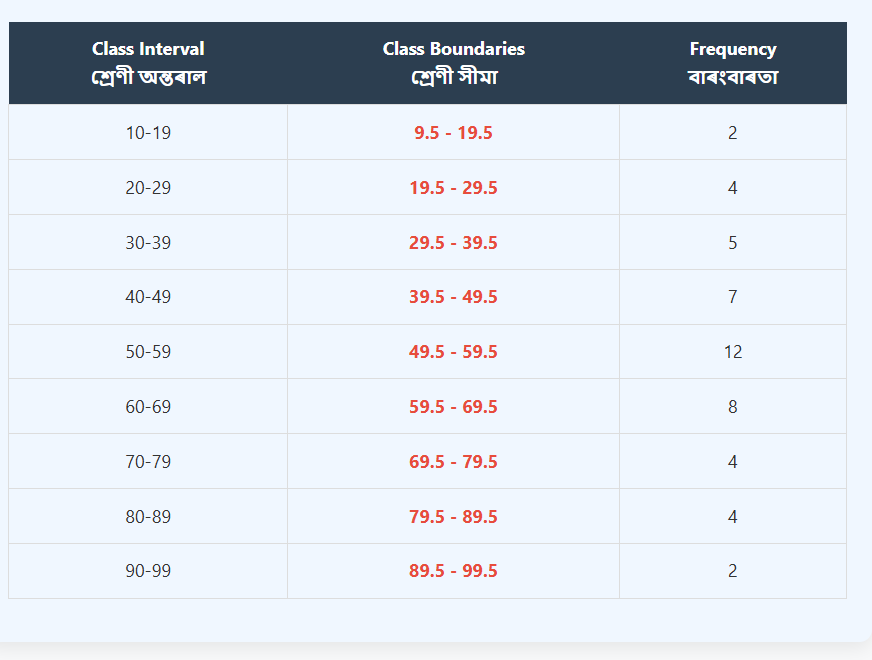
| Class Interval (শ্ৰেণী অন্তৰাল) | Frequency (বাৰংবাৰতা) |
|---|---|
| 10-19 | 2 |
| 20-29 | 4 |
| 30-39 | 5 |
| 40-49 | 7 |
| 50-59 | 12 |
| 60-69 | 8 |
| 70-79 | 4 |
| 80-89 | 4 |
| 90-99 | 2 |
| N = 50 |
উত্তৰ / Answer:
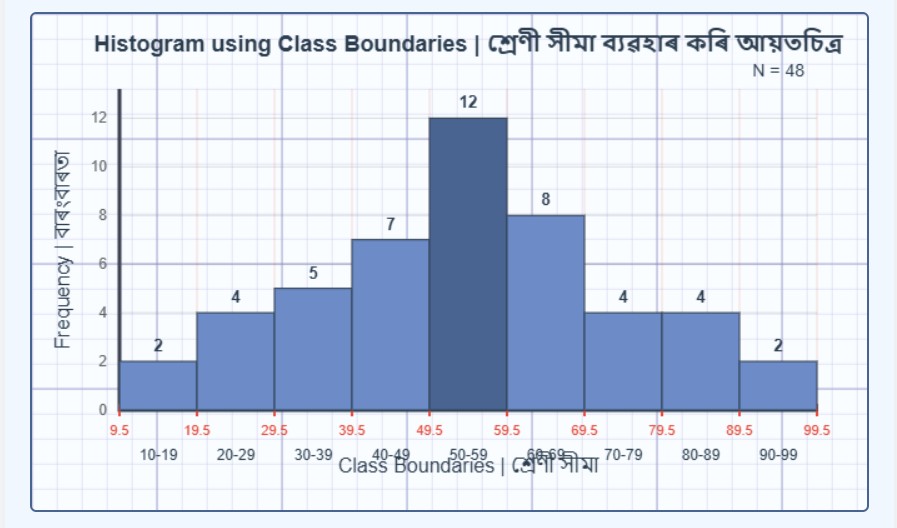
আয়তচিত্ৰ (Histogram): আয়তচিত্ৰ হৈছে বাৰংবাৰতা বিতৰণৰ এক গ্ৰাফীয় উপস্থাপন য’ত শ্ৰেণী অন্তৰালসমূহক অনুভূমিক অক্ষত আৰু বাৰংবাৰতাসমূহক উলম্ব অক্ষত আয়তক্ষেত্ৰৰ জৰিয়তে দেখুওৱা হয়। এই আয়তক্ষেত্ৰবোৰৰ প্ৰস্থ শ্ৰেণী অন্তৰালৰ সমান আৰু উচ্চতা বাৰংবাৰতাৰ সমানুপাতিক হয়। আয়তক্ষেত্ৰবোৰৰ মাজত কোনো ব্যৱধান নাথাকে। (A histogram is a graphical representation of a frequency distribution where class intervals are shown on the horizontal axis and frequencies on the vertical axis. The width of the rectangles corresponds to the class interval, and their height is proportional to the frequency. There are no gaps between the rectangles.)
আয়তচিত্ৰ অংকন (Drawing the Histogram):
অক্ষ নিৰ্ধাৰণ (Setting up Axes): অনুভূমিক অক্ষত (X-axis) শ্ৰেণী অন্তৰালসমূহ (Class Intervals) আৰু উলম্ব অক্ষত (Y-axis) বাৰংবাৰতাসমূহ (Frequency) চিহ্নিত কৰক।
শ্ৰেণী সীমা (Class Boundaries): অবিচ্ছিন্ন শ্ৰেণী অন্তৰালৰ বাবে, শ্ৰেণী সীমা নিৰ্ধাৰণ কৰিব লাগিব। (For continuous class intervals, class boundaries need to be determined.)
10-19 → 9.5-19.5
20-29 → 19.5-29.5
… আৰু এনেদৰে।
আয়তক্ষেত্ৰ অংকন (Drawing Rectangles): প্ৰতিটো শ্ৰেণী অন্তৰালৰ বাবে, ইয়াৰ বাৰংবাৰতাৰ সমান উচ্চতাৰ আয়তক্ষেত্ৰ অংকন কৰক। আয়তক্ষেত্ৰবোৰৰ মাজত কোনো ব্যৱধান নাথাকিব।
Histogram: A histogram is a graphical representation of a frequency distribution where class intervals are shown on the horizontal axis and frequencies on the vertical axis. The width of the rectangles corresponds to the class interval, and their height is proportional to the frequency. There are no gaps between the rectangles.
Drawing the Histogram: (Description of the drawing)
Setting up Axes: Mark the class intervals (here, class boundaries like 9.5, 19.5, 29.5… must be used) on the horizontal axis (X-axis) and the frequencies on the vertical axis (Y-axis).
Drawing Rectangles: For each class interval, draw a rectangle with a height equal to its frequency. There should be no gaps between the rectangles.
(n) দণ্ড বা স্তম্ভ চিত্ৰ কাক বোলে? স্তম্ভ চিত্ৰৰ বিভিন্ন প্ৰকাৰসমূহ উদাহৰণৰ সৈতে আলোচনা কৰা।
(n) What is a bar diagram? Discuss the different types of bar diagrams with examples. (1+3=4)
উত্তৰ:
দণ্ড বা স্তম্ভ চিত্ৰ: দণ্ড চিত্ৰ হৈছে তথ্য উপস্থাপনৰ এক গ্ৰাফীয় পদ্ধতি য’ত বিভিন্ন শ্ৰেণী বা চৰিত্ৰৰ বাৰংবাৰতা বা পৰিমাণক আয়তাকাৰ দণ্ডৰ জৰিয়তে দেখুওৱা হয়। এই দণ্ডবোৰৰ উচ্চতা বা দৈৰ্ঘ্য পৰিমাণৰ সমানুপাতিক হয় আৰু দণ্ডবোৰৰ মাজত ব্যৱধান থাকে।
বিভিন্ন প্ৰকাৰ:
সৰল দণ্ড চিত্ৰ: এটা মাত্ৰ চৰিত্ৰৰ বাবে তথ্য উপস্থাপন কৰিবলৈ ব্যৱহাৰ কৰা হয়। উদাহৰণ: বিভিন্ন শ্ৰেণীৰ ছাত্ৰ-ছাত্ৰীৰ সংখ্যা।
যৌগিক দণ্ড চিত্ৰ: দুটা বা ততোধিক চৰিত্ৰৰ বাবে তথ্য উপস্থাপন কৰিবলৈ ব্যৱহাৰ কৰা হয়, য’ত প্ৰতিটো দণ্ডক বিভিন্ন অংশত বিভক্ত কৰা হয়। উদাহৰণ: বিভিন্ন শ্ৰেণীৰ ল’ৰা আৰু ছোৱালীৰ সংখ্যা।
বহু দণ্ড চিত্ৰ: দুটা বা ততোধিক চৰিত্ৰৰ বাবে তথ্য উপস্থাপন কৰিবলৈ ব্যৱহাৰ কৰা হয়, য’ত প্ৰতিটো চৰিত্ৰৰ বাবে পৃথক দণ্ড অংকন কৰা হয়। উদাহৰণ: বিভিন্ন বছৰত ল’ৰা আৰু ছোৱালীৰ উত্তীৰ্ণৰ হাৰ।
Answer:
Bar Diagram: A bar diagram is a graphical method of representing data where the frequency or quantity of different categories or characteristics is shown using rectangular bars. The height or length of these bars is proportional to the quantity, and there are gaps between the bars.
Different Types:
Simple Bar Diagram: Used to represent data for a single characteristic. Example: The number of students in different classes.
Compound Bar Diagram: Used to represent data for two or more characteristics, where each bar is divided into different parts. Example: The number of boys and girls in different classes.
Multiple Bar Diagram: Used to represent data for two or more characteristics, where separate bars are drawn for each characteristic. Example: The pass percentage of boys and girls in different years.
৪। তলত দিয়া যিকোনো চাৰিটা প্ৰশ্নৰ উত্তৰ দিয়া :
4. Answer any four of the following questions: (6 × 4 = 24)
(a) ভাৰতবৰ্ষত শিক্ষা ব্যৱস্থাৰ সংগঠন আৰু মানদণ্ড সম্পর্কে কোঠাৰী আয়োগে আগবঢ়োৱা পৰামৰ্শাবলী আলোচনা কৰা।
(a) Discuss the suggestions of Kothari Commission regarding the structure and standard of the education system in India.
উত্তৰ: কোঠাৰী আয়োগে (১৯৬৪-৬৬) ভাৰতবৰ্ষৰ শিক্ষা ব্যৱস্থাৰ সংগঠন আৰু মানদণ্ড উন্নত কৰিবলৈ বহুতো গুৰুত্বপূৰ্ণ পৰামৰ্শ আগবঢ়াইছিল। ইয়াৰে কেইটামান তলত উল্লেখ কৰা হ’ল:
শিক্ষা গাঁথনি: আয়োগে ১০+২+৩ শিক্ষা গাঁথনিৰ পৰামৰ্শ দিছিল, য’ত ১০ বছৰৰ সাধাৰণ শিক্ষা, ২ বছৰৰ উচ্চতৰ মাধ্যমিক শিক্ষা আৰু ৩ বছৰৰ স্নাতক শিক্ষা অন্তৰ্ভুক্ত আছিল।
কৰ্ম অভিজ্ঞতা: শিক্ষাক জীৱনৰ লগত জড়িত কৰিবলৈ কৰ্ম অভিজ্ঞতাক পাঠ্যক্ৰমৰ এক অপৰিহাৰ্য অংগ হিচাপে অন্তৰ্ভুক্ত কৰাৰ ওপৰত গুৰুত্ব দিছিল।
শিক্ষকৰ মানদণ্ড: শিক্ষকৰ প্ৰশিক্ষণ, দৰমহা আৰু সেৱাৰ চৰ্তসমূহ উন্নত কৰাৰ পৰামৰ্শ দিছিল, যাতে শিক্ষকতা বৃত্তিটোক অধিক আকৰ্ষণীয় কৰি তুলিব পাৰি।
পাঠ্যক্ৰমৰ সংস্কাৰ: পাঠ্যক্ৰমক আধুনিক আৰু প্ৰাসংগিক কৰি তুলিবলৈ বিজ্ঞান, গণিত আৰু কাৰিকৰী শিক্ষাৰ ওপৰত গুৰুত্ব দিছিল।
সামাজিক ন্যায় আৰু সমতা: সকলো শ্ৰেণীৰ লোকক, বিশেষকৈ দুৰ্বল শ্ৰেণীৰ লোকক শিক্ষাৰ সমান সুযোগ প্ৰদান কৰাৰ ওপৰত গুৰুত্ব দিছিল।
শিক্ষা ব্যয়: মুঠ ঘৰুৱা উৎপাদনৰ (GDP) ৬% শিক্ষাত ব্যয় কৰাৰ পৰামৰ্শ দিছিল।
Answer: The Kothari Commission (1964-66) made many important recommendations to improve the structure and standard of the education system in India. Some of them are mentioned below:
Educational Structure: The commission recommended the 10+2+3 educational structure, which included 10 years of general education, 2 years of higher secondary education, and 3 years of undergraduate education.
Work Experience: It emphasized including work experience as an essential part of the curriculum to connect education with life.
Teacher’s Standard: It recommended improving teacher training, salaries, and service conditions to make the teaching profession more attractive.
Curriculum Reform: It emphasized science, mathematics, and technical education to make the curriculum modern and relevant.
Social Justice and Equality: It stressed providing equal educational opportunities to people of all classes, especially the weaker sections.
Educational Expenditure: It recommended spending 6% of the Gross Domestic Product (GDP) on education.
(b) মাধ্যমিক শিক্ষা সম্পর্কে ‘১৯৮৬ চনৰ ৰাষ্ট্ৰীয় শিক্ষানীতিত’ উল্লেখ কৰা পৰামৰ্শসমূহ আলোচনা কৰা।
(b) Discuss the suggestions forwarded by the ‘National Education Policy-1986’ regarding Secondary Education.
উত্তৰ: ১৯৮৬ চনৰ ৰাষ্ট্ৰীয় শিক্ষানীতিত মাধ্যমিক শিক্ষাৰ মানদণ্ড উন্নত কৰিবলৈ আৰু ইয়াক অধিক ফলপ্ৰসূ কৰি তুলিবলৈ বহুতো গুৰুত্বপূৰ্ণ পৰামৰ্শ আগবঢ়োৱা হৈছিল। ইয়াৰে কেইটামান তলত উল্লেখ কৰা হ’ল:
গুণগত মানদণ্ড: মাধ্যমিক শিক্ষাৰ গুণগত মানদণ্ড উন্নত কৰাৰ ওপৰত গুৰুত্ব দিয়া হৈছিল, য’ত পাঠ্যক্ৰম, শিক্ষণ পদ্ধতি আৰু মূল্যায়ন প্ৰণালীৰ সংস্কাৰ অন্তৰ্ভুক্ত আছিল।
বৃত্তিমূলক শিক্ষা: ছাত্ৰ-ছাত্ৰীসকলক বিভিন্ন বৃত্তিমূলক দক্ষতা প্ৰদান কৰি তেওঁলোকক আত্মনিৰ্ভৰশীল কৰি তোলাৰ বাবে বৃত্তিমূলক শিক্ষাক মাধ্যমিক শিক্ষাৰ এক গুৰুত্বপূৰ্ণ অংশ হিচাপে অন্তৰ্ভুক্ত কৰা হৈছিল।
কম্পিউটাৰ শিক্ষা: আধুনিক প্ৰযুক্তিৰ লগত ছাত্ৰ-ছাত্ৰীসকলক পৰিচিত কৰিবলৈ কম্পিউটাৰ শিক্ষাক মাধ্যমিক স্তৰত প্ৰৱৰ্তন কৰাৰ পৰামৰ্শ দিয়া হৈছিল।
শিক্ষকৰ প্ৰশিক্ষণ: শিক্ষকৰ প্ৰশিক্ষণৰ মানদণ্ড উন্নত কৰা আৰু তেওঁলোকক নতুন শিক্ষণ পদ্ধতিৰ বিষয়ে জ্ঞান দিয়াৰ ওপৰত গুৰুত্ব দিয়া হৈছিল।
নৱোদয় বিদ্যালয়: গ্ৰাম্য অঞ্চলৰ মেধাৱী ছাত্ৰ-ছাত্ৰীসকলক উন্নত মানৰ শিক্ষা প্ৰদান কৰিবলৈ নৱোদয় বিদ্যালয় স্থাপনৰ পৰামৰ্শ দিয়া হৈছিল।
Answer: The National Education Policy of 1986 put forward many important suggestions to improve the standard of secondary education and make it more effective. Some of them are mentioned below:
Quality Improvement: Emphasis was placed on improving the quality of secondary education, which included reforms in the curriculum, teaching methods, and evaluation systems.
Vocational Education: Vocational education was included as an important part of secondary education to provide students with various vocational skills and make them self-reliant.
Computer Education: It was recommended to introduce computer education at the secondary level to familiarize students with modern technology.
Teacher Training: Emphasis was placed on improving the quality of teacher training and equipping them with knowledge of new teaching methods.
Navodaya Vidyalayas: It was recommended to establish Navodaya Vidyalayas to provide quality education to talented students from rural areas.
(c) মূল্যবোধৰ শিক্ষা বুলিলে তুমি কি বুজা? বৰ্তমান সামাজিক পৰিস্থিতিত মূল্যবোধ শিক্ষাৰ প্ৰয়োজনীয়তা আৰু গুৰুত্ব আলোচনা কৰা।
(c) What do you mean by Value Education? Discuss the need and importance of Value Education in the present social circumstances.
উত্তৰ:
মূল্যবোধৰ শিক্ষা: মূল্যবোধৰ শিক্ষা বুলিলে এনে এক শিক্ষাক বুজায় যিয়ে ছাত্ৰ-ছাত্ৰীৰ মাজত নৈতিক, সামাজিক, সাংস্কৃতিক আৰু আধ্যাত্মিক মূল্যবোধৰ বিকাশ ঘটায়। ইয়াৰ জৰিয়তে ছাত্ৰ-ছাত্ৰীয়ে ভাল-বেয়া, উচিত-অনুচিতৰ পাৰ্থক্য বুজিব পাৰে আৰু এক দায়িত্বশীল নাগৰিক হিচাপে গঢ় লৈ উঠে।
প্ৰয়োজনীয়তা আৰু গুৰুত্ব: বৰ্তমানৰ সামাজিক পৰিস্থিতিত মূল্যবোধ শিক্ষাৰ প্ৰয়োজনীয়তা আৰু গুৰুত্ব অপৰিসীম:
নৈতিক অধঃপতন ৰোধ: বৰ্তমান সমাজত নৈতিক অধঃপতন, হিংসা, ভ্ৰষ্টাচাৰ আদি বৃদ্ধি পোৱা দেখা গৈছে। মূল্যবোধৰ শিক্ষাই এইবোৰ ৰোধ কৰাত সহায় কৰে।
সামাজিক সংহতি: মূল্যবোধৰ শিক্ষাই ছাত্ৰ-ছাত্ৰীৰ মাজত সহনশীলতা, ভাতৃত্ববোধ আৰু পাৰস্পৰিক সন্মানৰ ভাৱ বৃদ্ধি কৰি সামাজিক সংহতি বজাই ৰখাত সহায় কৰে।
সুনাগৰিক গঠন: ই ছাত্ৰ-ছাত্ৰীক দায়িত্বশীল, সহানুভূতিশীল আৰু দেশপ্ৰেমী সুনাগৰিক হিচাপে গঢ়ি তোলে।
মানসিক সুস্থতা: মূল্যবোধৰ শিক্ষাই ছাত্ৰ-ছাত্ৰীক মানসিকভাৱে সুস্থ আৰু শক্তিশালী কৰি তোলে, যাতে তেওঁলোকে জীৱনৰ প্ৰত্যাহ্বানসমূহৰ সৈতে মোকাবিলা কৰিব পাৰে।
Answer:
Value Education: Value education refers to a type of education that develops moral, social, cultural, and spiritual values among students. Through this, students can understand the difference between good and bad, right and wrong, and grow up to be responsible citizens.
Need and Importance: In the present social circumstances, the need and importance of value education are immense:
Preventing Moral Degradation: Currently, there is an increase in moral degradation, violence, corruption, etc., in society. Value education helps in preventing these.
Social Cohesion: Value education helps in maintaining social cohesion by increasing tolerance, fraternity, and mutual respect among students.
Formation of Good Citizens: It shapes students into responsible, compassionate, and patriotic citizens.
Mental Well-being: Value education makes students mentally healthy and strong, so they can cope with the challenges of life.
(d) মহিলা সবলীকৰণ বুলিলে কি বুজা? মহিলা সবলীকৰণত শিক্ষাৰ ভূমিকা সম্পর্কে আলোচনা কৰা।
(d) What do you mean by woman empowerment? Discuss the role of education in women’s empowerment.
উত্তৰ:
মহিলা সবলীকৰণ: মহিলা সবলীকৰণ বুলিলে মহিলাসকলক তেওঁলোকৰ জীৱনৰ সিদ্ধান্তসমূহ নিজে ল’বলৈ, নিজৰ অধিকাৰসমূহ সাব্যস্ত কৰিবলৈ আৰু সমাজৰ সকলো ক্ষেত্ৰতে (ৰাজনৈতিক, অৰ্থনৈতিক, সামাজিক) পুৰুষৰ সৈতে সমানে অংশগ্ৰহণ কৰিবলৈ সক্ষম কৰি তোলাক বুজায়।
শিক্ষাৰ ভূমিকা: মহিলা সবলীকৰণত শিক্ষাৰ ভূমিকা অপৰিসীম:
সচেতনতা বৃদ্ধি: শিক্ষাই মহিলাসকলক তেওঁলোকৰ অধিকাৰ, সুযোগ আৰু সমাজত তেওঁলোকৰ ভূমিকাৰ বিষয়ে সচেতন কৰে।
আত্মবিশ্বাস বৃদ্ধি: শিক্ষাই মহিলাসকলক জ্ঞান আৰু দক্ষতা প্ৰদান কৰি তেওঁলোকৰ আত্মবিশ্বাস বৃদ্ধি কৰে, যাৰ ফলত তেওঁলোকে নিজৰ সিদ্ধান্ত নিজে ল’ব পাৰে।
আৰ্থিক স্বাধীনতা: শিক্ষাই মহিলাসকলক বিভিন্ন বৃত্তিমূলক দক্ষতা আহৰণ কৰি আৰ্থিকভাৱে স্বাৱলম্বী হ’বলৈ সহায় কৰে।
সামাজিক স্থিতি উন্নত কৰা: শিক্ষাই মহিলাসকলক সমাজত সন্মানজনক স্থান লাভ কৰাত সহায় কৰে আৰু লিংগ বৈষম্য দূৰ কৰাত অৰিহণা যোগায়।
Answer:
Woman Empowerment: Woman empowerment means enabling women to make their own life decisions, assert their rights, and participate equally with men in all spheres of society (political, economic, social).
Role of Education: The role of education in women’s empowerment is immense:
Increasing Awareness: Education makes women aware of their rights, opportunities, and their role in society.
Boosting Self-confidence: Education provides women with knowledge and skills, which boosts their self-confidence, enabling them to make their own decisions.
Economic Independence: Education helps women to become financially independent by acquiring various vocational skills.
Improving Social Status: Education helps women to gain a respectable position in society and contributes to eliminating gender discrimination.
(e) শিক্ষণৰ অন্তদৰ্শন পদ্ধতি বুলিলে তুমি কি বুজা? শিক্ষণৰ অন্তদৰ্শন পদ্ধতিৰ শৈক্ষিক তাৎপৰ্যৰ বিষয়ে আলোচনা কৰা।
(e) What do you mean by the insightful method of learning? Discuss the educational significance of the insightful method of learning.
উত্তৰ:
শিক্ষণৰ অন্তদৰ্শন পদ্ধতি: শিক্ষণৰ অন্তদৰ্শন পদ্ধতি বুলিলে এনে এক শিক্ষণ প্ৰক্ৰিয়াক বুজায় য’ত ব্যক্তিজনে কোনো সমস্যাৰ সমাধান হঠাৎ আৰু পূৰ্ণৰূপে বুজি পায়। ইয়াত প্ৰচেষ্টা আৰু ভুলৰ দৰে ক্ৰমান্বয়ে শিকাৰ পৰিৱৰ্তে, সমস্যাটোৰ সকলো অংশৰ মাজৰ সম্পৰ্ক বুজি লৈ এটা নতুন সমাধান উদ্ভাৱন কৰা হয়।
শৈক্ষিক তাৎপৰ্য: শিক্ষণৰ অন্তদৰ্শন পদ্ধতিৰ শৈক্ষিক তাৎপৰ্য হ’ল:
সৃজনশীলতাৰ বিকাশ: এই পদ্ধতিয়ে ছাত্ৰ-ছাত্ৰীৰ মাজত সৃজনশীল চিন্তা আৰু সমস্যা সমাধানৰ ক্ষমতাৰ বিকাশ ঘটায়।
দীৰ্ঘস্থায়ী শিক্ষণ: অন্তদৰ্শনৰ জৰিয়তে শিকা বিষয়বস্তু দীৰ্ঘদিন ধৰি মনত থাকে আৰু সহজে পাহৰি নাযায়।
স্থানান্তৰণ: এই পদ্ধতিৰে শিকা জ্ঞান নতুন পৰিস্থিতিত সহজে প্ৰয়োগ কৰিব পাৰি।
উচ্চ স্তৰৰ শিক্ষণ: ই জটিল সমস্যাসমূহ সমাধান কৰাত সহায় কৰে আৰু উচ্চ স্তৰৰ শিক্ষণৰ বাবে উপযোগী।
Answer:
Higher-level Learning: It helps in solving complex problems and is suitable for higher-level learning.
Insightful Method of Learning: The insightful method of learning refers to a learning process where an individual suddenly and completely understands the solution to a problem. Instead of gradual learning like in trial and error, a new solution is discovered by understanding the relationship between all parts of the problem.
Educational Significance: The educational significance of the insightful method of learning is:
Development of Creativity: This method develops creative thinking and problem-solving abilities among students.
Long-lasting Learning: Material learned through insight is retained for a long time and is not easily forgotten.
Transfer of Learning: Knowledge learned through this method can be easily applied to new situations.
(f) মধ্যমা কাক বোলে? তলত দিয়া বিভাজন তালিকাৰ পৰা মধ্যমা নিৰ্ণয় কৰা :
(f) What is median? Compute median from the following distribution table: (1+5=6)
| Class Interval (শ্ৰেণী অন্তৰাল) | Frequency (f) (বাৰংবাৰতা) | Cumulative Frequency (cf) (সঞ্চয়ী বাৰংবাৰতা) |
|---|---|---|
| 30-34 | 2 | 2 |
| 35-39 | 2 | 4 |
| 40-44 | 3 | 7 |
| 45-49 | 5 | 12 |
| 50-54 | 8 | 20 |
| 55-59 | 12 | 32 |
| 60-64 | 10 | 42 |
| 65-69 | 7 | 49 |
| 70-74 | 5 | 54 |
| 75-79 | 4 | 58 |
| 80-84 | 2 | 60 |
| N = 60 |
উত্তৰ / Answer:
মধ্যমা (Median): মধ্যমা হৈছে এটা তথ্যৰাশিৰ মাজৰ মান যিয়ে তথ্যসমূহক দুটা সমান ভাগত বিভক্ত কৰে। অৰ্থাৎ, মধ্যমাৰ ওপৰত আৰু তলত সমান সংখ্যক তথ্য থাকে। (Median is the middle value of a data set that divides the data into two equal halves. That is, an equal number of data points lie above and below the median.)
মধ্যমা নিৰ্ণয় (Calculation of Median):
Class Interval (শ্ৰেণী অন্তৰাল)
Frequency (f) (বাৰংবাৰতা)
Cumulative Frequency (cf) (সঞ্চয়ী বাৰংবাৰতা)
30-34
2
2
35-39
2
4
40-44
3
7
45-49
5
12
50-54
8
20
55-59
12
32
60-64
10
42
65-69
7
49
70-74
5
54
75-79
4
58
80-84
2
60
N = 60
মধ্যমাৰ স্থান (Median position) = N/2 = 60/2 = 30
সঞ্চয়ী বাৰংবাৰতা স্তম্ভত 30 বা তাৰ ওপৰৰ প্ৰথম সংখ্যাটো হ’ল 32। ইয়াৰ শ্ৰেণী অন্তৰাল হ’ল 55-59।
গতিকে, মধ্যমা শ্ৰেণী (Median class) = 55-59।
মধ্যমাৰ সূত্ৰ (Median formula):
Median = L + [(N/2 – cf) / f] × i
য’ত (where),
L = মধ্যমা শ্ৰেণীৰ নিম্ন সীমা (Lower limit of median class) = 54.5 (55-0.5)
N/2 = 30
cf = মধ্যমা শ্ৰেণীৰ পূৰ্বৰ শ্ৰেণীৰ সঞ্চয়ী বাৰংবাৰতা (Cumulative frequency of the class preceding the median class) = 20
f = মধ্যমা শ্ৰেণীৰ বাৰংবাৰতা (Frequency of the median class) = 12
i = শ্ৰেণী অন্তৰাল (Class interval) = 5
Median = 54.5 + [(30 – 20) / 12] × 5
Median = 54.5 + [10 / 12] × 5
Median = 54.5 + (0.8333) × 5
Median = 54.5 + 4.1665
Median = 58.67 (প্ৰায়)